
Tehran smells weakness
Trump needs Hormuz open. Iran knows it. The talks in Switzerland revealed who holds the stronger hand in this phase of the conflict.

I wrote the other day that the Iranian regime needs three things: time, money, and control. I would like to expand on that, because today’s meeting in Switzerland drove the point home.
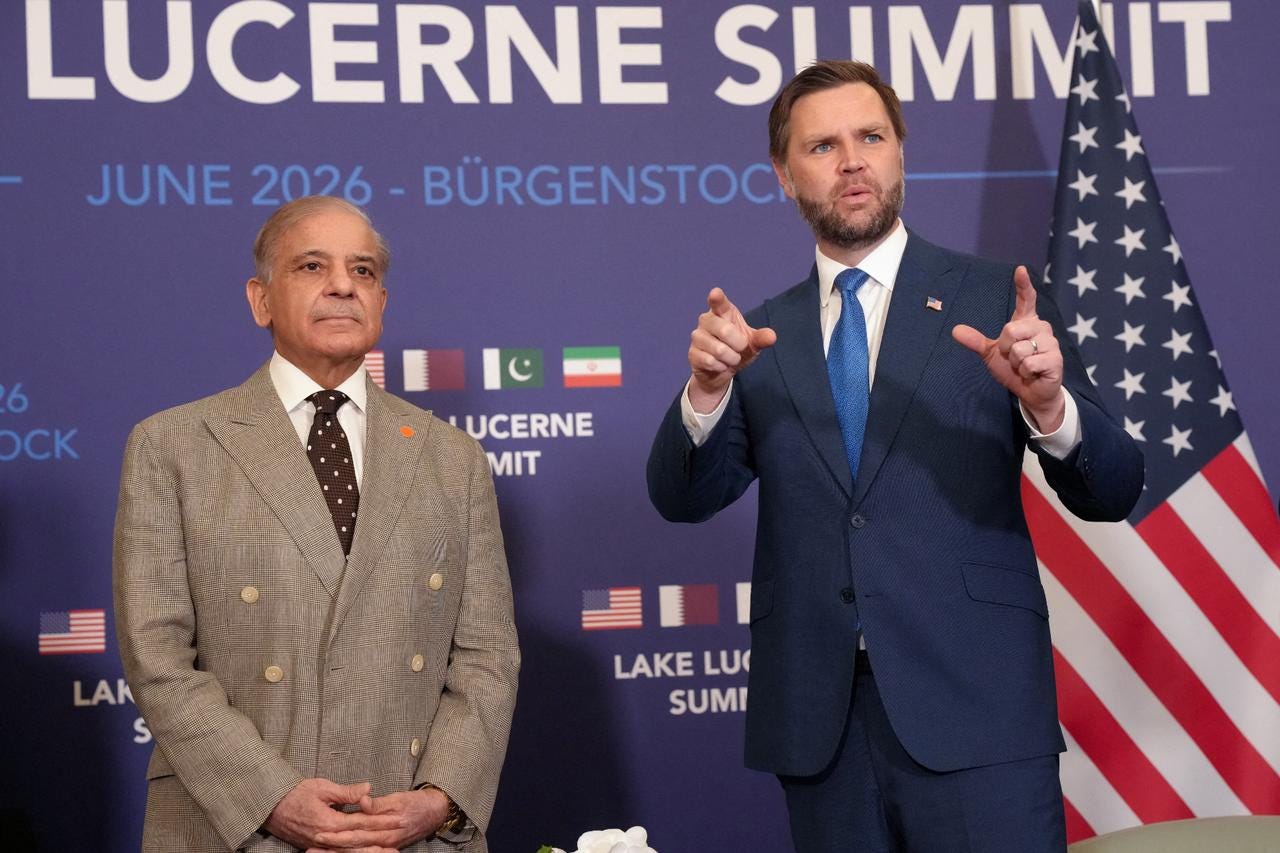
Iran is playing a very clear game, and the regime’s negotiators know exactly what they are doing. The delay, the reported lateness, the blanking of the Americans, and the refusal to give Washington the clean optics of a joint appearance: these are signals. Tehran is telling Trump that it will not be rushed, present the Trump administration with photo opportunities, or be neatly folded into an American victory narrative. The Iranian delegation refused to appear on camera alongside the US team, even though the two sides were later briefly filmed in the same room, and the afternoon format involved Iran, the US, Pakistan and Qatar. It was the diplomacy of studied insult.
Iran needs time first. Time to get oil moving through Hormuz again, but in a way that makes the reopening of the Strait of Hormuz conditional, reversible, and politically useful. Tehran’s position goes beyond simply “open” or “closed”. Every barrel, every tanker, every demined shipping lane, and every assurance to markets comes at a price.
That price is leverage over Washington’s relationship with Israel. The conflict in Lebanon between the IDF and Hezbollah is now central. Iran has been explicit that the talks must focus on the Lebanon ceasefire, the terms for reopening Hormuz, oil sanctions, and access to frozen assets. In other words, Hezbollah is being inserted into the US-Iran negotiations as a test of whether Trump can restrain Israel.
This is the Hezbollah-shaped wedge Tehran is trying to drive between Washington and Jerusalem. Iran needs Hezbollah to remain a persistent enough problem that every Israeli action in southern Lebanon can be turned into an Iranian complaint about American bad faith. Israel strikes, Iran claims the memorandum has been breached, and Trump either pressures Israel or risks Hormuz. The point is to trap Washington between oil prices and Israeli operational freedom.
Trump has already shown Tehran where the pressure point lies. The president has today publicly threatened Iran, including over Hormuz and Hezbollah, while JD Vance has tried to project a softer, deal-making tone from Switzerland. Vance said the talks had made “great progress”, while Trump was simultaneously warning that Iran must stop its “proxies in Lebanon” or face harder strikes.
That contradiction (and Trump’s Truth Social bluster) helps Iran. Tehran can pocket Vance’s language of reset, use Trump’s threats to justify delay, and present itself domestically as the side refusing humiliation. The walkout after Trump’s threats should be read in that context. The Iranians had reportedly made progress on oil waivers and frozen assets before suspending the talks in protest. Diplomatic performance theatre: extract movement on money, then dramatise resistance while making Trump look like a fool and showing strength when threatened.
Money is the regime’s second priority. Iran has to rebuild. It has to refill state accounts, stabilise patronage networks, pay security forces, repair damaged infrastructure, and repress an angry public. The presence in Switzerland of the head of Iran’s central bank and the CEO of the National Iranian Oil Company tells us what Tehran is prioritising.
The regime’s problem is more than just securing the funds needed to rebuild. Internal allocation is a matter of internal dispute. Hardliners will want money for rearmament and deterrence. The security state will want money for surveillance, prisons, salaries, and coercive capacity. Ordinary Iranians will want relief after war, sanctions, inflation, and exhaustion. Every dollar that returns to Iran becomes part of an internal struggle over what kind of state survives this war.
That brings us to control. The regime needs control over the streets, the factions, and the narrative. The performance in Switzerland serves all three. By blanking the Americans on camera, Tehran tells hardliners at home: we are negotiating, but we are not bowing. Delaying and suspending talks gives rival centres of power time to argue over red lines. By keeping Hormuz and Lebanon linked, it prevents the negotiation from narrowing to a technical nuclear discussion in which Iran would face more direct pressure.
The immediate Iranian plan is therefore coherent. Slow the clock, make America pay for access to calm, tie Hormuz to Lebanon, turn Hezbollah into a pressure instrument against Washington and Jerusalem, wring concessions from Trump while he is visibly desperate to keep energy flowing, secure as much money as they can before the nuclear issue becomes unavoidable, and maintain enough external crisis to justify internal discipline.
Iran needs a pause that pays, a negotiation that divides its enemies, and a domestic narrative that says: we have Donald Trump and America on strings. On today’s performance, they have it.
Iran knows that Vance is desperate for a deal. They have no problem with belittling the VP. The pictures coming out of Switzerland where they snubbed Vance is insulting and he needed to walk away at that moment. They also do not care what Trump says on Truth Social. He says things all the time and then never follows through. I am so disgusted.
"Barking dogs have no bite," as you know, the Bedouins say. And, the Persians, know.
Negotiating with the masters of bargaining in the souk against a Peter Thiel Marine journalist, a builder from Queens, and his arrogant son-in-law financed by the Kingdom, is an unfair mismatch.