
Information warfare: how narratives are shaping the Iran conflict
From propaganda about destroyed schools to pressure campaigns targeting Britain, the struggle to control global opinion has become as important as the fighting itself.

Another day, another series of chaotic developments in the Iran conflict. Iranian strikes against Turkey, Azerbaijan, and Georgia have introduced another layer of potential escalation; the uncertainty over a possible US-backed Kurdish insurgency in Iran persists; and the main oil refinery in Bahrain is on fire.
However, I promised not to give a breathless commentary on daily events. This is because a serious researcher needs time to process, analyse, synthesise, and draw conclusions. This war is now on many fronts, so anyone offering a string of hot takes will almost certainly be wrong within one circadian rhythm. Instead, today I will discuss the most 2026 aspect of this war: the information battle.
Every actor in this conflict is trying to manipulate your thoughts as they move the actual pieces. If you are following the Iran war through the public feed, you are not just “following events”. You are being influenced by Tehran, Kurdish factions, Israel, Gulf states, a mix of professional amplifiers and passionate amateurs, and every entity with a stake in what Western publics believe they are seeing. Layer on top of that the algorithms of your chosen media platform, social or otherwise, and the things it believes you want to see to keep you scrolling.
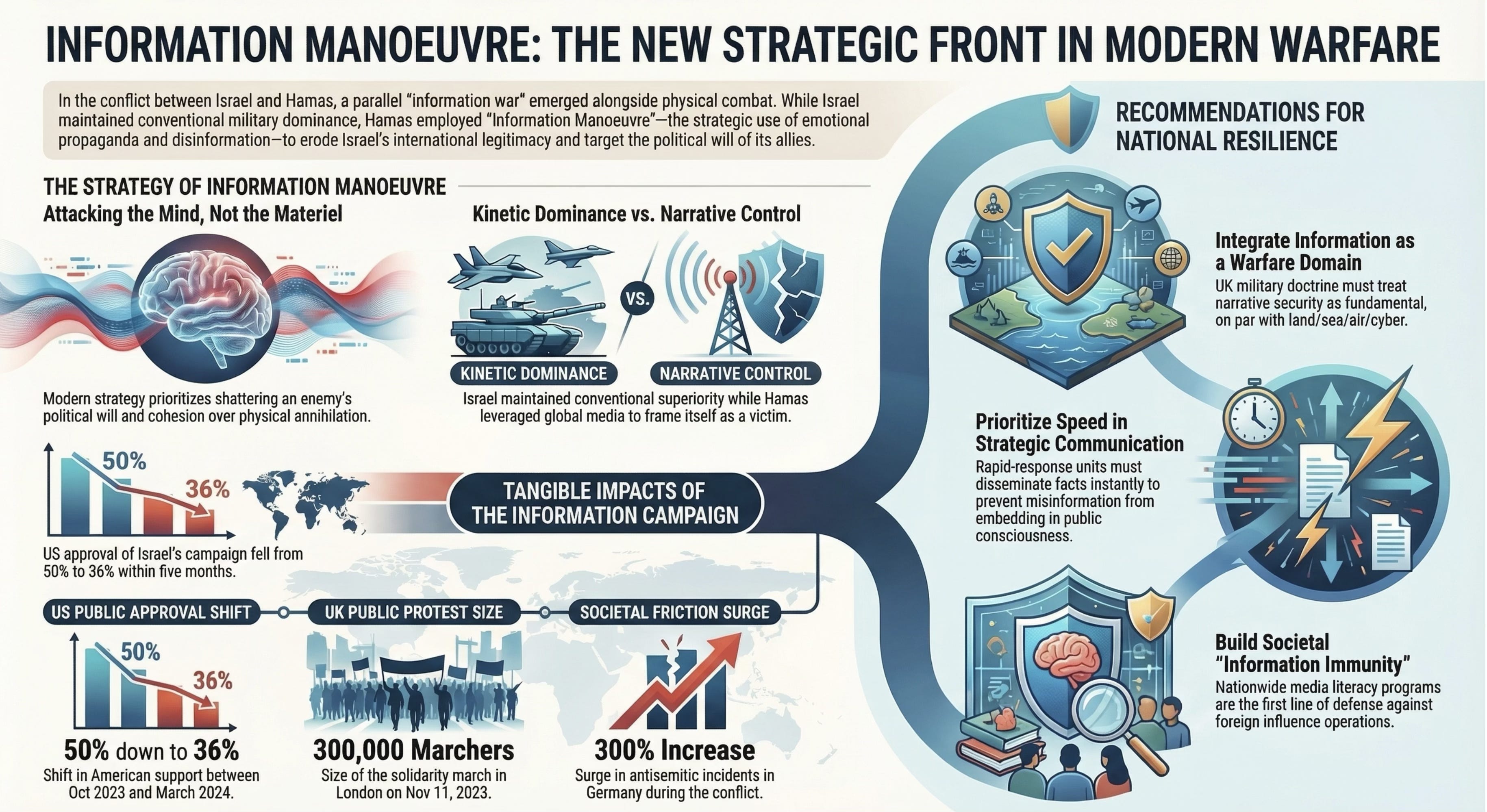
In my 2025 Henry Jackson Society paper, I used the phrase “information manoeuvre” to describe how a weaker actor can attack a stronger one by targeting will, cohesion, and legitimacy rather than tanks and territory. The battlefield is psychological, and in democracies, the pressure point is public opinion. Facts do not travel evenly. What travels is what can be made emotionally legible quickly, what can be clipped, captioned, memed, and turned into a moral demand instantaneously. The paper refers to the Gaza War as a model (see schematic below), but it applies equally to what we are seeing today: strategic information and messaging for tactical effect. It is not automatically malign; every participant in a modern conflict will be trying to sway international publics to help them achieve their strategic goals. This is simply warfare in the digital age.
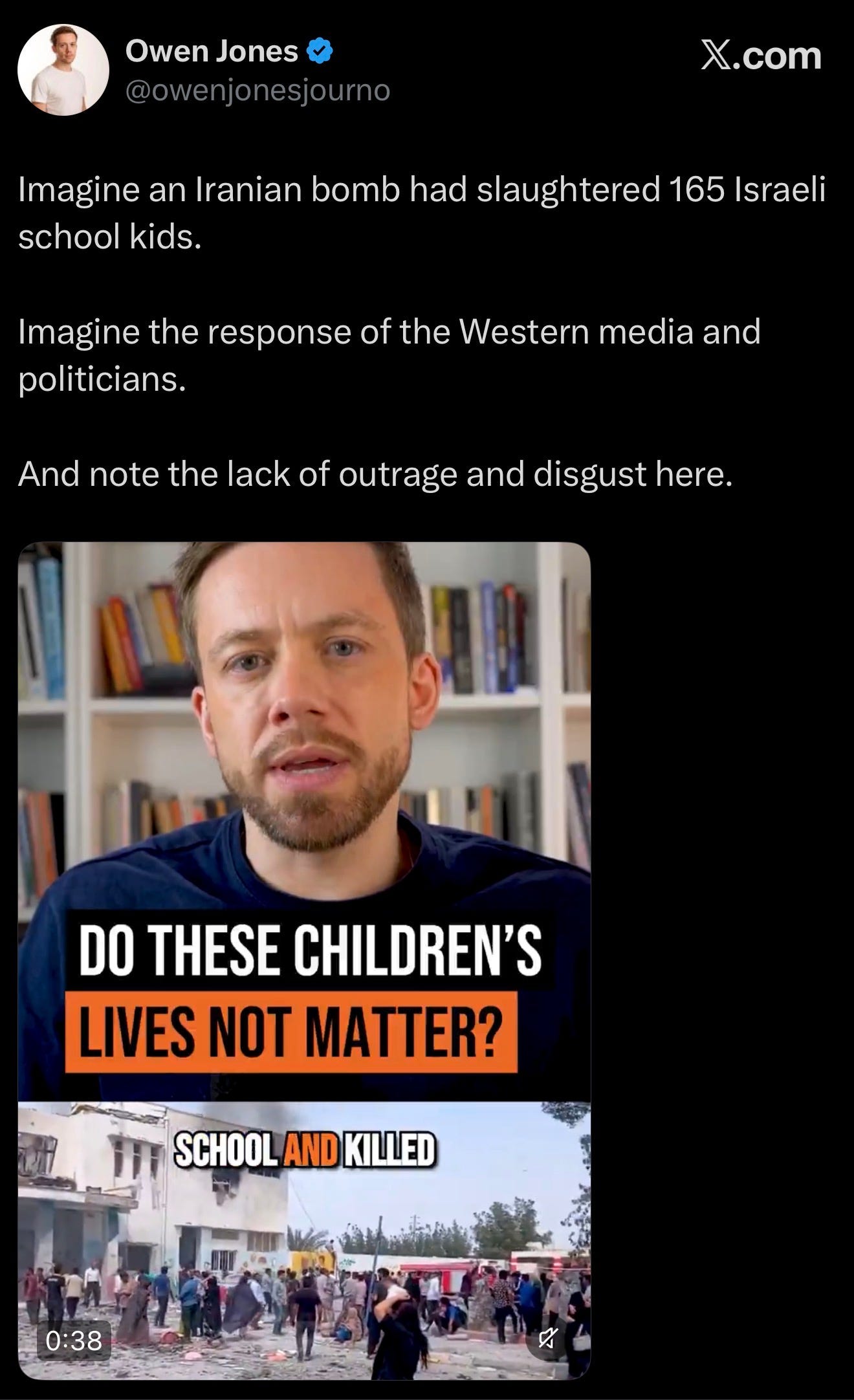
That said, let us start with the malign: Iran’s own messaging, which has been brutally rational in its choice of imagery. The “destroyed school” narrative is not mainly aimed at convincing Iranians who already know the regime’s story, or even at persuading the region where hostility towards Israel and the West is already ingrained. It is designed for Western audiences who can be moved by a single, powerful image, especially one featuring children, classrooms, satchels, and the clear iconography of innocence. Whatever the tactical or operational reality of the strike, the narrative goal is obvious: reduce the war to one morally decisive scene, then project that scene into London, Paris, Berlin, Washington, and every place where politicians are swayed by their social media feeds. See below for a choice example from far-left British polemicist and anti-Israel obsessive, Owen Jones.
Once you observe it, you notice the symmetry: you don’t need to “win” the war to win the argument about the war, and if you do win the argument, you can limit the other side’s freedom of action. A ceasefire demand in a Western capital is more than mere moral posturing; it is also an operational effect influenced by an opponent’s domestic politics. In 2026, the strike package and the story package are scheduled in the same week, sometimes on the same day.
The Kurdish messaging is a different kind of manoeuvre, and in some ways it is more sophisticated because it relies on uncertainty rather than clarity. Kurdish groups are clearly positioning themselves for some form of armed insurrection inside Iran, or at least for a serious escalation that looks indistinguishable from one. However, today they are also busy denying it, disclaiming it, fragmenting it into a fog of “we’re not doing that / we have no plans / we’re only defending ourselves” while the online ecosystem does the opposite and hints, teases, and drops just enough to keep Tehran (and everyone watching) off balance. That denial is the tactic; it buys time, keeps options open, complicates retaliation and forces the Iranian regime into paranoia and dispersal, which is itself a form of pressure. If you want to make an adversary waste effort, keep them guessing about what you are doing and when.
Israel’s stance, by contrast, is competence theatre: articles and briefings emphasising how the regime was deceived, how intelligence infiltrated, how targets were selected, how the timing was impeccable, and how this was a masterclass. This is not frivolous boasting. It has its roots in hard truth, but also caters to a domestic audience seeking reassurance. It provides allies with a justification that feels precise rather than reckless, and it serves as a reminder to enemies that the state can observe, reach, and prevent.
However, there is a tell here because information manoeuvres cut both ways. If you want the world to believe you achieved surprise through deception, you also want the world to forget how much of modern “surprise” is really just a performance layered on top of an open secret. Loose-lipped Israeli officials were leaking 28 February as the start of the war, a week before it happened. Of course, there was exceptional deception, and Iranian counterintelligence was caught off guard, but the “we fooled them” narrative functions as a strategic storyfull, even if the pre-war information environment was, in reality, loud of signals. The war itself may have been planned like a chess move; the pre-war chatter still sounded like a pub.
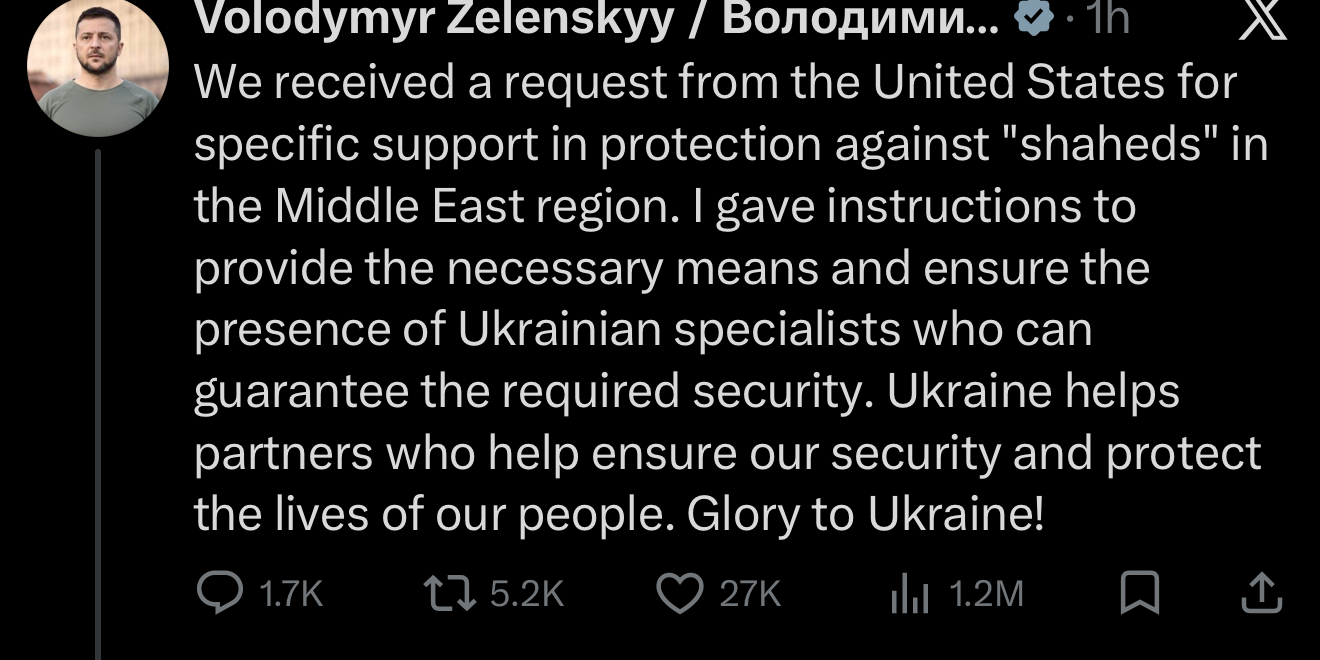
Zelenskyy’s messaging serves as another instructive example, demonstrating how swiftly modern conflicts intertwine in the information space, even when the kinetic theatres are separate. Today, he has emphasised Gulf requests for anti-drone defences, which, on one level, is entirely logical: Ukraine has become the world’s most scrutinised testing ground for what works against drones, including Iranian-designed systems.
However, there is a second, more subtle level that is both reputational and diplomatic: Ukraine must stay “relevant” to allies who are now preoccupied with a Middle East escalation and can use the current anti-drone demands as leverage for Ukraine’s desperate need for missile interceptors. In the last six days, the Gulf states have fired more Patriots than Ukraine has in four years of war. If the Gulf is seeking Kyiv’s expertise, then Kyiv is not simply a recipient of Western support; it is now also a provider of security value. This is a smart framing and a great opportunity for Ukraine to find an emotional connection to those states that have now also experienced life under relentless Shahed drone assault.
The reality beneath, however, is less dramatic than the messaging suggests. Iranian drone attacks have, in practical terms, reached nuisance levels in that they are disruptive, dangerous, and politically useful, but not strategically decisive like the early mythology of drones suggested. Nuisance remains a form of warfare when it causes populations to fear, governments to stay on constant defence, air defence supplies to dwindle, and drones continue to get through and set oil refineries ablaze. The point is that “nuisance” is precisely the kind of threat that is ideal for information manoeuvre: frequent enough to film, survivable enough to repeat, ambiguous enough to debate indefinitely, and emotionally primed for publics who feel like they are living under a deadly threat. The Ukrainians have cleverly leveraged this.
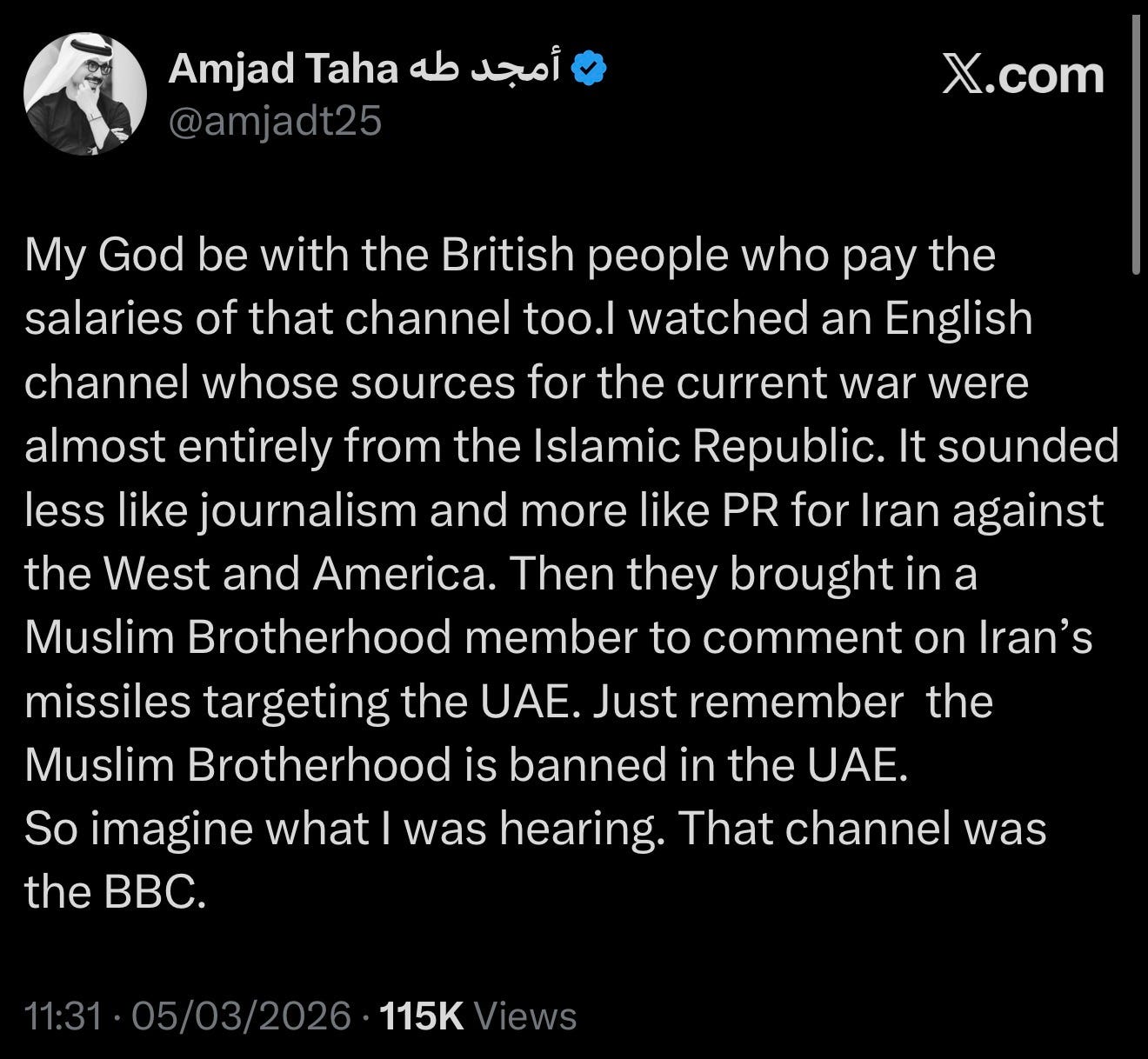
One interesting narrative is the layer which specifically targets the UK audience. Gulf states, particularly the UAE, are running a powerful online campaign aimed at shaming Britain into joining the war, or at least adopting a more confrontational stance. The messaging often focuses on Iranian influence within the UK: networks, proxies, intimidation, and the idea that Britain is already infiltrated and therefore has a duty to act. If you spend any time on X, you will recognise the style, including high-profile accounts like Amjad Taha promoting a confrontational “wake up, Britain” message designed to spread quickly and serve as a moral rebuke rather than a policy argument.
Why pursue that campaign so aggressively now? Partly because the UAE desires broader coalition support. There is a significant difference between “Israel and the US are doing a thing” and “a wider group of allies are aligned against Tehran”. Even if British involvement is limited or mainly defensive, the political message is important. It internationalises the legitimacy claim. It increases the perceived costs for Iran, and it offers the Gulf states a narrative to share with their own publics and rivals: they are not alone, the West supports them, and they are not exposed.
There is also a more transactional aspect to it. The UAE recognises the psychology behind Western hesitation: Britain is scarred by Iraq, exhausted from Afghanistan, and domestically volatile on Middle East issues. Therefore, persuasion is difficult. Shame is simpler, cheaper, and better suited for the social media era, where the goal is not to persuade your opponent’s foreign office but to create the impression that “everyone” believes they should act, and to make inaction seem like cowardice rather than caution.
It is notable, too, that Israeli influencers are promoting a very similar message. While this overlap might seem natural, it clearly serves a strategic purpose. After two years during which Hamas propaganda and its wider ecosystem have alienated significant portions of Western public opinion from Israel, Israel has a conspicuous interest in shifting the focus. “Iranian influence in the UK” is a domestic security argument that British elites, in particular, are inclined to take seriously. It is a narrative link back to the familiar frame: Britain and Israel as allies confronting a hostile state threat.
This is an effort to reposition the UK by redefining the moral landscape. If the argument shifts to “Britain is under Iranian influence and must respond,” then refusing to participate in offensive action can be seen not as restraint but as self-harm. That is the tactic: turn “don’t escalate” into “you’re already losing.”
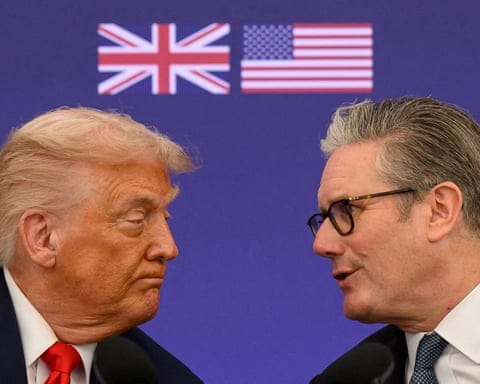
This is where the campaign faces a major obstacle: UK public opinion remains firmly opposed to British military involvement. Despite online pressure, the country is not willing to be pushed into another Middle Eastern conflict through moral blackmail, influencer outrage, or foreign information campaigns that seem too clearly aimed at manipulation. People may accept defensive actions; they may agree on intelligence cooperation; they might support protecting shipping or strengthening air defences, but generally, they do not want British jets to strike Iran just because a hashtag said it was necessary.
This brings me back to the main point. The Iran war is not only fought by states; it is fought through audiences. Everyone is manoeuvring for legitimacy, coalition cohesion, domestic approval, and the ability to persist. These narratives go far beyond commentary; they are part of the war.
In the age of social media, messaging is just as much part of the war effort as ballistic missiles, drones, and air strikes. If there is one skill worth practising as a reader right now, it is the simplest but also the hardest: ask what each actor needs you to believe today to make tomorrow easier for them.
Six days in, and I’m still keeping this run of updates open to everyone. At moments like this, getting clear, sober analysis into as many hands as possible matters more than putting it behind a paywall. If you think these briefings are useful, please share them. One forward to the right person still beats any algorithm. If you haven’t already, subscribe below so the next updates land directly in your inbox. And for those who choose to support the work with a paid subscription — thank you.
Now I feel smart. I recently posted something similar to FB.
A number of friends have posted about the school bombing in Iran. It speaks to the goodness of their hearts that they ache for the pain felt by the parents who have lost children and the children who have either had their lives cut too short or who have been injured; innocents who were caught in the crossfire of political battles by those who will likely suffer little.
But these posts bother me and I've struggled to understand why. Here's what I came up with.
The unquestioning acceptance of the reports. Iranian media has been the only source. One can recognize that it happened and even that either the US or Israel were responsible (some are arguing that Iran was itself responsible for propaganda purposes, I'm not) while also questioning the framing. But that's not what's happened. Instead, people argue either that the school was deliberately targeted or that intention doesn't matter and they ignore the Iranian regime's actions toward its own people and their destabilizing effect on the region at large and not just Israel, btw. MBS (Saudi Arabia) and MBZ (UAE) both actively encouraged US action. For that matter, Iran is actively supportive of Russia and its war with Ukraine.
Intention doesn't matter to those directly affected by the tragedy. It matters a lot when you then make accusations about legal responsibility. Context also matters. Both are ways in which people's innate goodness is weaponized by others as a form of domestic warfare, propaganda warfare. They are like magicians who, with sleight of hand, tell you to look at what they're actively showing you while hiding something important elsewhere.
In many ways, responsibility in war is a "yes, and" proposition.
Were either Israel or the US responsible for bombing the school?
Yes, and so was the Iranian regime for breaking international law and building the school next to a military installation as a human shield.
**Based on The Guardian's analysis, this is less likely to be true. There were clear attempts to distinguish the school from the adjacent military buildings.
Do the deaths and maiming of innocents automatically increase the illegitimacy of a war and the governments that are responsible for the attack?
Yes, and one can mourn while acknowledging that the Iranian regime has rendered itself utterly illegitimate by the many ways it has brutalized, maimed, and murdered its own people.
Should one doubt the motives of the attackers and recognize the many ways in which they have broken both international law and, in the case of the US, domestic law?
Absolutely. And, one can still hope the attack provides an opportunity for other innocent Iranians to free themselves from a murderous regime that has far more blood on its hands, blood of those it was tasked with protecting.
When one expresses only one half of the equation, when you oversimplify the moral math, you run the risk of becoming a mouthpiece for the regimes rather than a supporter of those who suffer most from such repressive, brutal regimes.
Thank you for describing the different war narratives and talking points.
We greatly appreciate your work.